 By Nicolas Maltais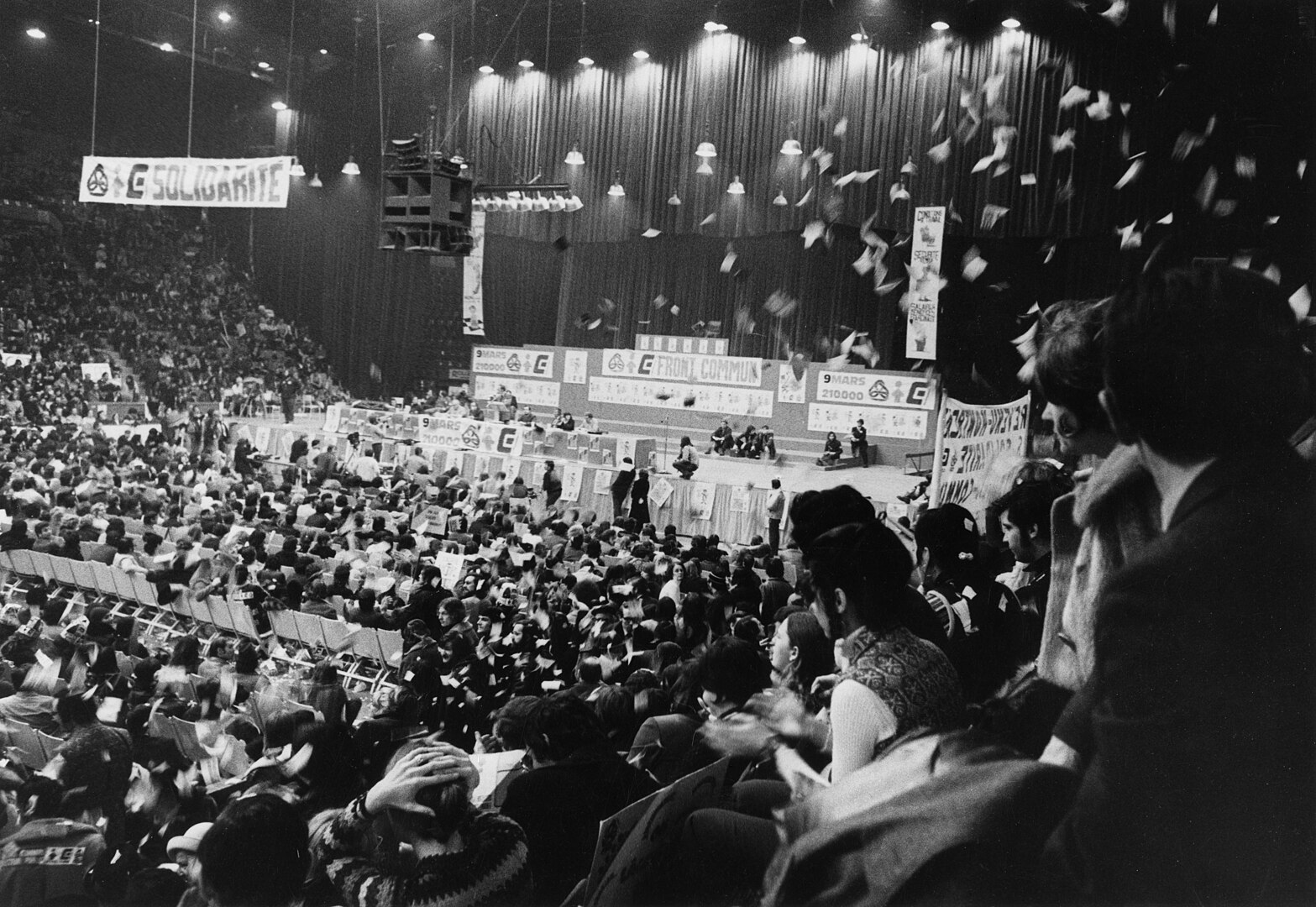
In the spring of 1972, Quebec became the stage for one of the most important and dramatic labour confrontations in Canadian history. That year, three of Quebec’s largest union federations—the Confédération des syndicats nationaux (CSN), the Fédération des travailleurs du Québec (FTQ), and the Centrale de l’enseignement du Québec (CEQ)—came together in an unprecedented show of unity. This alliance, known as the Front commun or Common Front, brought over 210,000 public sector workers together to demand better wages, improved working conditions, and pay equity across the province’s public services.
The seeds of the strike had been planted in the years prior, as inflation eroded public sector wages and government austerity measures deepened inequality. Workers across schools, hospitals, and government services were growing increasingly frustrated. Although Quebec had seen strikes before, the level of coordination and resolve demonstrated in 1972 was new—and it sent shockwaves through the province’s political establishment.
A United Front with Bold Demands
The Common Front entered negotiations with the provincial government, led by Liberal Premier Robert Bourassa, demanding a uniform $100-a-week minimum wage across the public sector—a bold and symbolic demand meant to address wide disparities and systemic undervaluing of public service work. But talks quickly deteriorated, as the government refused to entertain the unions’ wage proposals.
Tensions rose as the unions escalated their strategy, beginning with rotating strikes that gradually intensified. By April, the strike had become province-wide, shutting down key public services. Schools were closed, hospitals operated on limited capacity, and civil service operations ground to a halt. The disruption was widespread and impossible to ignore.
Repression and Resistance
In response to the growing pressure, the government passed Bill 19, a special law that imposed a wage settlement and declared the strikes illegal. It was an aggressive and heavy-handed move meant to break the movement’s momentum. But rather than retreating, the unions dug in.
On May 1, 1972, the leaders of the three union centrals—Marcel Pepin (CSN), Louis Laberge (FTQ), and Yvon Charbonneau (CEQ)—released a joint communiqué urging workers to defy the law. It ended with a stark call to action:
“Il faut désobéir.” (“We must disobey.”)
This simple but electrifying phrase echoed through union halls and picket lines across the province. Four days later, the three leaders were arrested and jailed for contempt of court. Their imprisonment was meant to serve as a warning—but instead, it lit a fire.
A Province-Wide Uprising
On May 9, 1972, in a spontaneous and historic show of solidarity, more than 300,000 workers walked off the job in a general strike that transcended union lines. Public and private sector workers alike joined the action, shutting down factories, offices, construction sites, and transit systems. The strike had transformed from a wage dispute into a mass political uprising, with workers challenging not only unfair labour practices but the legitimacy of state repression.
The atmosphere was electric, defiant, and euphoric. It marked one of the only times in Canadian history when the labour movement openly defied the courts, the legislature, and the police—on such a broad and coordinated scale.
A Lasting Legacy
Though the government ultimately prevailed in enforcing its legislation, and the immediate wage gains were limited, the strike left a deep and permanent mark on Quebec society.
The show of unity across unions demonstrated that workers could exercise collective political power far beyond the bargaining table. Public sector unions emerged from the strike with renewed militancy and organizational strength. Their ability to act together became a model not only for Quebec but for labour movements across Canada.
The events of 1972 also helped catalyze a broader political shift in Quebec. Union activists became key players in the province’s growing progressive and nationalist movements, many of them later joining or supporting the Parti Québécois, which formed its first government in 1976. The idea that labour could shape the direction of the province—not just through negotiations, but through social and political mobilization—had taken hold.
Echoes in the Present
More than fifty years later, the legacy of the 1972 Common Front strike continues to resonate. Public sector unions in Quebec still coordinate bargaining through common fronts, and in 2023, a new generation of public workers once again took to the streets in one of the largest strike actions in recent history. They marched under banners evoking 1972, chanting old slogans alongside new ones, aware that they were part of a long and proud tradition of resistance.
The Common Front strike of 1972 was more than a labour dispute. It was a moment when workers across Quebec demanded to be heard—not as isolated employees, but as a united social force capable of challenging the status quo. It remains a powerful example of what solidarity, courage, and defiance can accomplish in the face of injustice.